By Dr. Kevin P. Wallace
Van of Valor
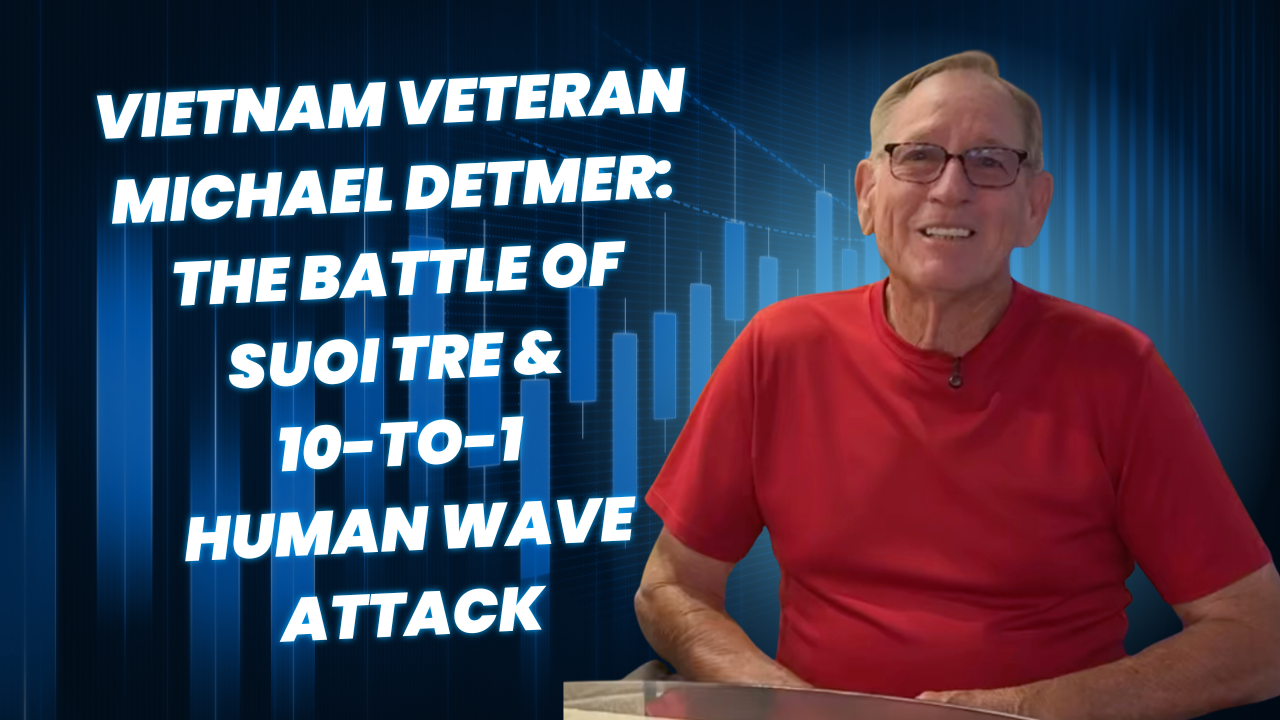
BARTELSO, Ill. – The cornfields of Southern Illinois stretch flat and patient toward the horizon, a world away from the triple-canopy jungle Michael Detmer walked in 1967.
On a warm August afternoon at the Standin’ Proud Veteran’s Tribute in Bartelso, I sat down with Detmer as part of the Van of Valor’s ongoing mission to document the oral histories of our nation’s Purple Heart recipients and Gold Star families.
We were many months and thousands of miles into our journey around the contiguous United States — further than the circumference of the Earth itself — and yet, here in this small town, the weight of history felt as heavy as it did on the battlefields of Normandy or the hills of Khe Sanh.
Detmer is a farmer’s son. Raised in Beckemeyer, now living in St. Rose, he describes his younger self as a “motorhead,” more interested in engines than sports.
But on December 27, 1965, that young man received a piece of paper that would reroute the trajectory of his life.
He was drafted.
Make a one-time donation
Make a monthly donation
Make a yearly donation
Choose an amount
Or enter a custom amount
Your contribution is appreciated.
Your contribution is appreciated.
Your contribution is appreciated.
DonateDonate monthlyDonate yearly“There were thirty of us from the county,” Detmer recalled, his voice steady but soft. “Ten of us ended up in the same unit. Fourth Infantry Division, Third of the Twenty-Second.”
That unit would ship out to the Mekong Delta, and later, to a patch of dirt near the Cambodian border that would bear the name Suoi Tre.
It was March of 1967. Operation Junction City. The brass had a plan: fly artillery into the jungle, dangle it like bait, what Detmer called “that little ear of corn,” and wait for the North Vietnamese Army to bite.
They bit hard.
“We were outnumbered ten to one,” Detmer said. “Maybe more. They came shoulder to shoulder. Wave after wave. Human waves.”
Detmer served as an assistant machine gunner. His gunner was Don Schultz. In the middle of the chaos — the crack of rifles, the thump of mortars, the screams of the wounded — Detmer heard something he will never forget.
Don was praying.
“That’s when I realized,” Detmer said, pausing to let the memory settle. “I thought, ‘We are in trouble here.’”
They were minutes from being overrun. Minutes from running out of ammunition. Tom Shank, their ammo bearer, took a round to the eye. Detmer patched him up as best he could in the dirt and smoke. Tom would lose that eye, survive, and pass away years later. Don Schultz survived too, though he’s now on oxygen, the war still claiming its toll in slow motion.
The battle turned when armored personnel carriers finally arrived, breaking the NVA assault like a wave against a seawall. But not before a spotter plane was shot from the sky. Not before twenty Americans were killed and hundreds more wounded.
Detmer was among them.
He earned a Purple Heart that day, though when I asked about the moment of his own wounding, he didn’t linger.
He spoke instead of the men beside him.
The ones who didn’t come home.
The ones who did, but carried the war inside them like shrapnel that would never work its way out.
Detmer was one of those.
He came home to a wife who “stuck with him” through decades of anger and anxiety. They married shortly after his return, and she bore the brunt of a war she never fought. He speaks of her with a reverence reserved for the truest of allies.
“She saved me,” he said. “More than she’ll ever know.”
He also found healing in reunions. Every two years, the men of Bravo Company, 3rd of the 22nd, gather. Spouses come too. Detmer believes those gatherings saved marriages, not just his own, by giving families a space to understand what their husbands and fathers carried.
Now, as president of the Bravo Company veterans association, Detmer ensures the names of the fallen are spoken aloud. Names like Herman Anders, a platoon mate honored by a bridge dedication in Green, New York.
Dignitaries came.
A 21-gun salute cracked the air.
It was a long way from the makeshift “Herman Andrews Baseball Field” the unit had scrawled on a sign at a reunion years earlier, but Detmer made sure Herman’s siblings saw the photos.
“I never regret that I went there,” Detmer told me, looking out over the tribute grounds. “Never. And the friends I made… I have friends all over the United States now. We’re close. We still get together.”
He still carries the war in other ways. Hypervigilance. Anger that flares without warning. He knows veterans who sleep with firearms within reach, a habit born of years sleeping with a rifle in the bush. He credits his wife’s patience for helping him navigate a world that didn’t always understand.
But the world is changing. Slowly.
Make a one-time donation
Make a monthly donation
Make a yearly donation
Choose an amount
Or enter a custom amount
Your contribution is appreciated.
Your contribution is appreciated.
Your contribution is appreciated.
DonateDonate monthlyDonate yearlyDetmer now marches in parades. He’s active with the Vietnam Veterans of America. On motorcycle trips across the country, even up to Alaska, strangers buy his meals. They thank him. They didn’t always.
When I asked what he wished Americans understood, he didn’t hesitate.
“How many countries could you talk about your president and live?” he asked. “If they don’t like it here, I don’t know why they don’t leave. People need to see what we have compared to third-world countries. Then they’d know.”
He watches modern conflicts, Afghanistan, the withdrawal, the missile strikes, with a mix of anger and sorrow. He sees parallels. He feels the weight of sacrifices made, and sometimes squandered.
When his grandchildren ask about service, his advice is conflicted: support them if they choose to go, but maybe steer them toward the Air Force. Or the Space Force. One family member served as an Air Force translator with top secret clearance, then became a carpenter. Detmer is proud of that too.
The Van of Valor rolled out of Bartelso with another story etched into its memory. Another hero honored. Another name added to the roster of Americans who gave something most will never comprehend.
Detmer is a farmer’s son. A motorhead. A husband. A friend. A patriot.
And on a March morning in 1967, near a jungle no one had heard of, he stood his ground while the waves came crashing in.
This interview is brought to you by Van of Valor, on a mission to meet veterans where they are, one story, one ride at a time. If you or someone you know has a story to share, we’re still on the road, and we’re still listening.
Reach out!
Make a one-time donation
Make a monthly donation
Make a yearly donation
Choose an amount
Or enter a custom amount
Your contribution is appreciated.
Your contribution is appreciated.
Your contribution is appreciated.
DonateDonate monthlyDonate yearly
Leave a Reply