Dr. Kevin P. Wallace
Van of Valor
ST. LOUIS, Mo. — The firebase was raw, like a dripping claret wound sliced into the jungle’s green flesh. Perched on a low hill, it was a precarious circle of order in a land of chaos. Defined by its earthen berms, tangled concertina wire, and sandbagged bunkers, it had become home to Army Sgt. David Allwine, assigned to Military Assistance Command, Vietnam (MACV).
By day, the air was thick with the scents of diesel fuel, damp earth, and the distant, ever-present wood-smoke of cooking fires from the nearby village. The Stars and Stripes hung limp in the humid air, a splash of defiant color against the monochrome olive drab of tents and armored personnel carriers.
As dusk bled into night, the perimeter lights flickered on, casting a weak, orange halo that pushed back against the absolute blackness of the surrounding jungle, a blackness that felt watchful and alive. From Allwine’s experience, danger always lurked there.
Suddenly, the darkness came alive with hail of AK-47 rounds. Sound seemed to be swallowed by the night, then shattered by the whop, whop, whop of familiar blades. With eyes straining through the darkness, Allwine finally saw it all clear
– death –
Everywhere!
Jumping into action, Allwine began dragging casualties to the Hueys as he fended off a brutal attack. Rocket-propelled grenade (RPG) rounds walked the ground, ripping through the comms equipment… the bunkers… his friends.
Looking toward the perimeter, Allwine saw one North Vietnamese Army (NVA) soldier throw the body of a dead NVA onto the c-wire, then another, and then another. Then, shadows began methodically and ruthlessly pouring through the breached wire. A moment later, another RPG hit Allwine’s position.
The world was silent once again.
Allwine was dead.
Perhaps.
A passing NVA soldier fired a single shot into each American lying on the ground, to ensure they were all dead. For Allwine, it was that bullet that actually restarted his heart, he has now come to believe.
The sun rose and smoke began to settle. As he slowly began to come to, Allwine felt himself being pulled from rubble, but recalled seeing utter desolation. Where once flew an American flag now stood a burnt splintered stump. Thick, silty smoke coiled from the husks of jeeps and the collapsed skeletons of bunkers. The red earth was churned and blackened, littered with the poignant debris of lost lives.
Of the hundreds of Americans who fought tooth and nail to survive the night before, all now were still in the grim morning light. The sole survivor was dragged, dazed and wounded, from the pile of rubble that buried him when the RPG struck.
Rough hands bound his wrists, and pain throbbed in his chest, his stomach, his shoulder; everywhere. Allwine caught a final, searing glimpse of the overrun base — his home, his prison, his comrades’ tomb — then a blindfold plunged him into a different kind of darkness, the beginning of a long and solitary captivity.
Though the words were lost on him, a stern shove was enough to understand the NVA wanted him to walk. Air left his lungs, then a gasp. When he tried to draw it air back in, he couldn’t. A searing, sucking sensation bloomed in his chest with every frantic, aborted attempt.
A young NVA soldier, face impassive, struck Allwine with his rifle, and his lungs released a loud groan. As the soldier drew back his rifle again and prepared to strike Allwine’s already bleeding head, he seemed to hear the wet, bubbling sound.
Allwine’s vision swam. He couldn’t walk like this, and the NVA had no intention of offering a stretcher. That meant one thing, he was dead weight.
Pushing through the pain of his own failing body, he let out a soft whisper, “I can walk.”
He later stitched himself up by pulling strings from banana leaves and made a bamboo needle, sharpened by his own teeth.
Allwine said he learned this from his father. His proficiency, also, was so good that when he heard the NVA released female German nurses back to the Germans, he tried to convince them he was a German doctor, by speaking the moderate amount of the language he knew, also taught by his father.
The march began and Allwine’s legs, miraculously unharmed, obeyed out of some primal survival instinct. His left arm hung useless, a pendulum of agony with every step. His shoulder, completely shattered.
He had a broken left shoulder, sucking-chest-wound on his right side, his diaphragm was torn, and he had a bullet lodged in his lower back.
The chest wound was the true master of his misery. Every inhalation was a battle he was losing. He couldn’t draw a full breath. His body, starved for oxygen, screamed in a constant, silent panic. He moved in a shallow, panting rhythm, a fish drowning on land. How could he survive a 40-day walk up north under these conditions, he wondered?
The first day was a blur of pain and hypoxia. On the second day, his daily ration was introduced. A guard shoved a small, hard ball of cold rice into his good hand. Another placed a single, dried slice of orange peel on top of it. A third ladled two scoops of murky water from a canvas bag into his mouth.
Allwine, in his delirium, tried to ask for more water. The response was a rifle butt to his broken shoulder, sending him to his knees, vision exploding into white stars. The lesson was learned.
And so, the 40 days trudged on.
Make a one-time donation
Make a monthly donation
Make a yearly donation
Choose an amount
Or enter a custom amount
Your contribution is appreciated.
Your contribution is appreciated.
Your contribution is appreciated.
DonateDonate monthlyDonate yearlyHe walked. The world narrowed to the muddy, root-tangled path ahead, the back of the prisoner in front of him, and the symphony of his own broken body. The sucking in his chest was a constant, wet metronome to his steps.
At night, lying on the damp ground, he could feel the air leaking from his lung into the cavity of his chest, a slow, suffocating inflation. He learned to sleep propped against a tree, fighting for every shallow sip of air.
The next morning offered a glimpse of hope. With his blindfold now removed, Allwine saw 16 South Vietnamese soldiers with him in captivity. He was not alone, after all. Then, hearing a familiar voice, Allwine’s exhausted eyes faintly made out another American.
It was unmistakable. Another Soldier survived, Allwine remembered thinking! It was Sgt. First Class James Salley, Jr., from Allwine’s same company.
His happiness soon faded and he lost track of time. Days bled into nights, yet, like a well-kept clock, the beatings seemed to occur right on schedule. To add insult to injury, American politics and communist propaganda deeply affected the NVAs views on Salley and Allwine.
Contrasting Allwine’s one riceball, one slice of orange peel and two ladles of water; Salley was given two riceballs, a half of a banana, and three ladles of water.
“The NVA was trying to pit Salley and I against each other, which would never work,” said Allwine. ”The communists told the NVA that the Americans only put ranks on black soldiers for the optics.”
Most of Allwine and Salley’s beatings were due to the pair of soldiers “not admitting their actual rank structure.”
“The NVA were convinced I, an E-5 Sergeant, was in charge of an E-7,” said Allwine. “They beat us badly daily because we kept telling them he was in charge.”
Finally, Allwine recalled that he and Salley concocted a plan to admit that communist propaganda was actually correct, “and then they beat us even worse for telling them that. It was bad, really bad,” said Allwine.
Though his rations were larger, Salley seemed to recover much slower with each beating. On his final day, Allwine was helping Salley trudge, allowing his friend to rest some of the weight of his fractured body upon Allwine’s own disfigured one.
“The next morning they woke me up and made me dig a hole, a grave for Salley they told me,” said Allwine.
In the burning Vietnamese jungle, just beside their foot trail, Allwine dug a hole.
The NVA then threw the dead soldier in, and began covering him with dirt. Allwine stepped up to take over the task.
“He was my friend, my only friend, and I was going to be the one to bury him with compassion, with love and respect, not like they were just shoveling [the dirt] all over him,” said Allwine, who never got to see his friend’s face one last time. “I only saw one black leg sticking out of badly tattered fatigues.”
The march to damnation continued.
The monsoon rains came, turning the path into a river of mud. Each step was a Herculean effort, his boots sucking and pulling with the sound of the earth itself trying to claim him. The fever found him next, a fire that burned from the inside, fed by the infection brewing around the bullet in his back. He shivered and sweated, his mind unraveling.
“I began losing my mind, and hallucinating about my wife,” said Allwine. “I reached for her once, and found my hand closed around a lump of cold rice. I would imagine cold bottles of beer sweating in the sun rather than rusty-tasting ladle water. I had conversations with dead comrades, their faces appearing in the gnarled roots of banyan trees.”
His physical self was also being systematically dismantled. His uniform hung on him in tatters. His ribs became a stark fence under his skin. The flesh around his wounds was swollen, hot, and wept a foul-smelling pus. The bullet in his torso felt like it was growing, a malevolent seed taking root.
To survive, Allwine had to evolve, remembering, “I had to stop being David, and I had to be that chest wound; had to be that hunger; had to survive those 40 days, never knowing what would happen next.”
Somewhere around the 30th day, a strange clarity descended. The pain was still there, a vast, continental presence, but he had learned to live on its shores. He was a machine made of agony, programmed to walk. He noticed small things again — the iridescent wing of a beetle, the specific green of a fern, the way the light filtered through the triple-canopy jungle.
He was almost nothing, a whisper of a man, and in that near-nothingness, he found a sliver of peace. They could take his body, break it, starve it, but this tiny, observing part of him, this final ember of consciousness, was his.
Days later, the path widened and the jungle thinned. They emerged into a clearing dominated by a cluster of long, low, bamboo huts surrounded by rusting barbed wire. A flag with a yellow star hung limply in the humid air.
The guards shoved him through a gate. He stood, swaying, a skeleton held together by scar tissue and willpower.
“Easy, brother,” someone whispered, his voice raspy, as he came toward Allwine, putting his hand comfortingly on Allwine’s shoulder. “The walk’s over.”
Allwine tried to speak, but only a dry, rattling sound came out. He looked down at his chest, at the filthy, blood-soaked banana stitches. He looked at the man holding him. He had survived the march. He had walked forty days with a death sentence written in his own flesh.
“But, what lies ahead?” he remembered thinking.
He was a prisoner of war. But in that moment, as the man led him toward the dark, gaping doorway of the hut, Allwine knew, with a certainty that eclipsed all his pain, that the walking was only the beginning. A two-year-long night was about to descend.
Make a one-time donation
Make a monthly donation
Make a yearly donation
Choose an amount
Or enter a custom amount
Your contribution is appreciated.
Your contribution is appreciated.
Your contribution is appreciated.
DonateDonate monthlyDonate yearly
To speak of Allwine’s name is to speak of strength forged in darkness, of hope that endured in the face of despair, and of a spirit that could not be broken.
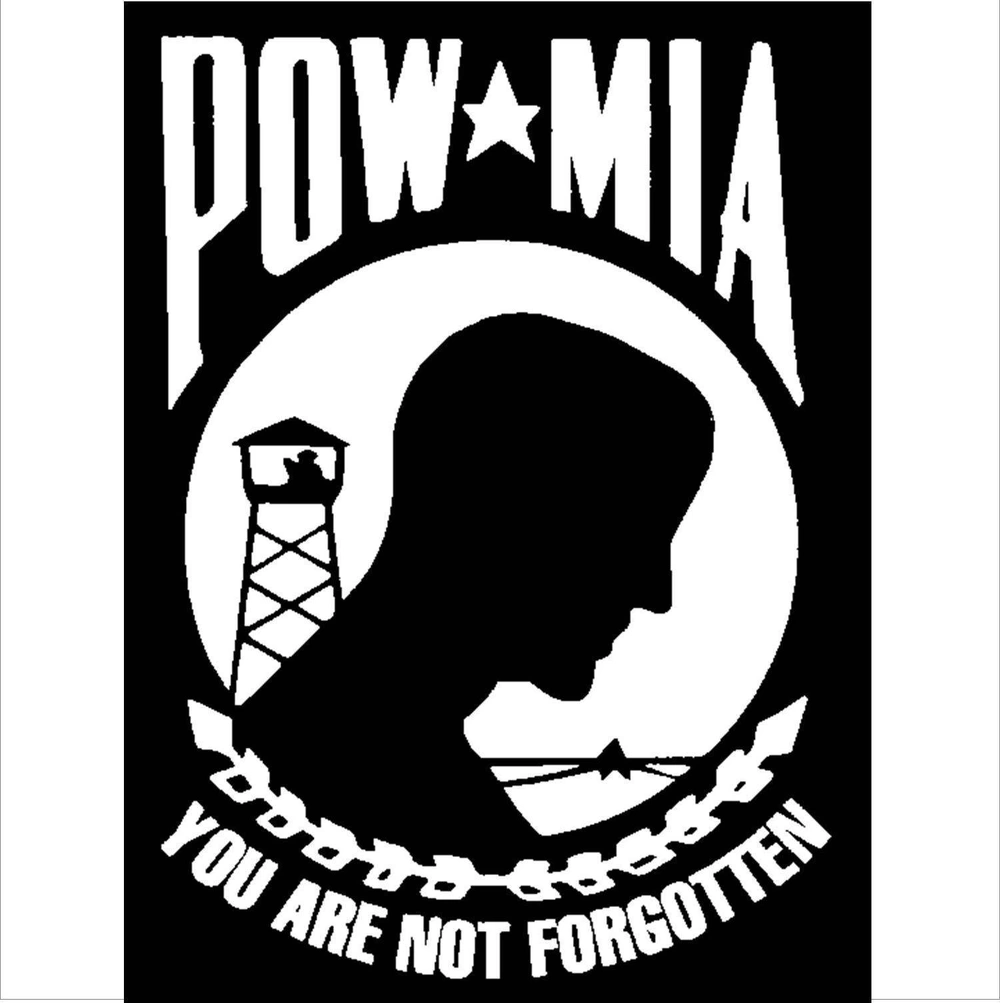
For 755 days, he was held captive, a POW in North Vietnam, but the measure of his life is not in the years he lost, but in the life he reclaimed.
Allwine was more than a soldier who endured. He was a symbol for every family who waited, prayed, and clung to hope during the Vietnam War.
His name, etched onto the service bracelets worn by countless Americans, was a silent vow to never forget those who were gone. His eventual release and homecoming with Operation Homecoming in 1973 was a moment of profound joy — a sign that the promise was kept.
His return was not the end of his story, but the beginning of another journey.
As an Army veteran, he continued to serve his country and community, sharing his experience to remind others of the true cost of freedom. As a former POW, those asks are frequent.
Decades later, Allwine’s quiet strength and enduring spirit continue to inspire. His legacy is carried forward by those who heard his story and felt its impact.
He proved that no matter the hardship, the human spirit can not only survive, but return home, not defeated, but with a message of hope and unbreakable resilience.
To read more, visit www.HelpVoV.com


Leave a Reply