
BLACKFOOT, Idaho – In an era of fleeting headlines and 24-hour news cycles, some stories risk fading from the collective memory.
But on highways and backroads across America, a converted van is on a mission to be a rolling archive of remembrance.
Its occupants are not typical tourists; they are collectors of courage, preservers of legacy, and witnesses to the cost of freedom.
This is the Van of Valor, the heart of a project spearheaded by Dr. Kevin and Lauren Wallace. Their mission is as simple as it is profound: to travel the continental United States in their renovated van, seeking out Purple Heart recipients and Gold Star families to record and share their stories.
It is a “quest,” as they call it, to honor the bravery of veterans, immortalize the sacrifices of the fallen, and ensure that the legacies of these heroes are not confined to dusty archives or fading photographs, but are shared with a public that must never forget.
It is in the pursuit of these very individuals—the ones whose stories are often overshadowed by broader historical narratives—that the Van of Valor’s mission finds some of its most poignant subjects.
Their journey leads them not only to the battlefields of foreign wars but also to the unexpected, and often forgotten, homefront casualties of America’s conflicts.
One such story begins not in a jungle or a desert, but in the cold, silent expanse of the Idaho desert on January 3, 1961.
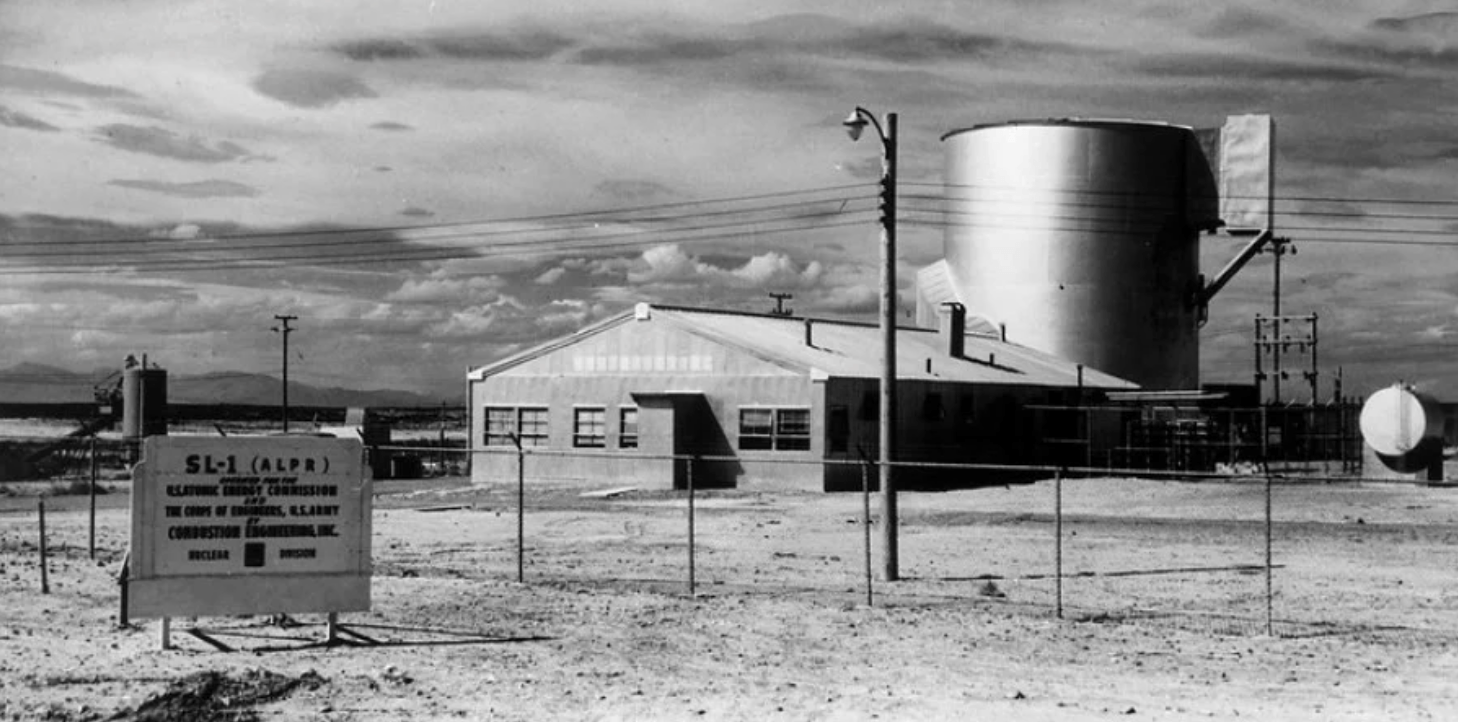
If 26-year-old Navy Seabee 1st Class Richard Legg and Army SPC John Byrnes, 22, and Richard McKinley, 27, had known what was going to happen when they arrived at the SL-1 reactor for the first working day of the New Year, they might still be around to talk about it.
America was at the height of the Cold War. At the National Reactor Testing Station, the forerunner to the Idaho National Laboratory (INL), the focus was on harnessing the atom for energy. The SL-1 was one of 52 test reactors at the site, an experimental boiling water reactor conducting research for the U.S. Army.
On that fateful evening, the three military men prepared to restart the reactor after an 11-day maintenance shutdown. It was a gradual process with multiple steps. But in a catastrophic instant, the routine became fatal.
“At some point, (Byrnes pulled) the main control rod. (It) got moved too fast and too far,” explained Curtis Smith, an INL spokesman. The reactor surged past full operation, triggering a chain reaction and a violent explosion.
The blast slammed Byrnes against a concrete wall and impaled Legg against the ceiling. Both men died instantly. McKinley was initially knocked unconscious.
When an alarm sounded, response teams arrived to a scene that betrayed the horror within. The building’s exterior looked normal. But upon entry, their radiation detectors screamed in alarm.
The rescuers, rotating in 65-second intervals to minimize their own exposure, found the highly radioactive bodies of Legg and Byrnes among the debris.
Crews attended to McKinley, but he died from his injuries hours later.
An investigation later determined a control rod, which had a history of sticking, had been pulled more than two feet out of the reactor—more than six times the 4-inch maximum. The cleanup lasted up to 18 months. The men were buried in lead-lined caskets.
To this day, the SL-1 explosion stands as the only fatal nuclear reactor accident in U.S. history.
“While there have been what are considered industrial fatalities at other generating stations,” a historical fact sheet notes, “these are the only U.S. fatalities caused by the process of making nuclear energy.”
The story of Legg, Byrnes, and McKinley is precisely the kind of sacrifice the Van of Valor seeks to preserve. Other news sources may choose to relay whatever “news worthy” stories their editors accept.
“They were service members who died in the line of duty, not on a traditional battlefield, but on the front lines of technological advancement during the Cold War,” said Dr. Wallace. “Their sacrifice, while unique in its circumstances, is no less significant than that of a soldier felled by enemy fire. They are, in every sense, American casualties of a global conflict, and their legacy is a crucial part of the nation’s military and scientific history.”
But the Cold War’s domestic toll extended beyond the gates of research facilities. Just eight years before the SL-1 accident, another nuclear drama was unfolding 500 miles to the south, with consequences that would ripple through generations.
In 1950, President Harry Truman designated a 1,350-square-mile tract of Nevada desert as a site for nuclear weapons testing—an endeavor wholly separate from Idaho’s energy research.
Between March and June of 1953, the Atomic Energy Commission conducted Operation Upshot-Knothole, a series of eleven atomic bomb detonations.
One warhead, codenamed “Harry,” was detonated on May 19, 1953. It was “designed to do far more damage while giving off less harmful side effects,” writes author Ryan Uytdewilligen. But the experiment went awry.
“When the bomb was detonated, a yield of 32 kilotonnes was produced — almost double what scientists were anticipating,” Uytdewilligen notes. “For reference, the bomb dropped on Hiroshima, (Japan) was only 13 kilotonnes, not even half of Harry.”
The massive, unexpected yield sent a radioactive cloud—dubbed “Dirty Harry”—drifting far beyond the test site. It descended upon communities in Utah, Nevada, and Arizona, exposing unsuspecting civilians, including the now-famous “Downwinders,” to dangerous levels of fallout. The legacy of Harry is one of illness, loss, and a long, bitter fight for recognition and compensation by the families who paid a price for their nation’s security in their own homes.
For a project like the Van of Valor, the connections are clear. The families of those Downwinders, who lost loved ones to cancers linked to radiation exposure, share a bond of sacrifice with Gold Star families.
The soldiers who were ordered to witness atmospheric tests and later fell ill are veterans whose stories of service-connected disability deserve to be heard alongside those of Purple Heart recipients from more conventional wars.
This is the expansive, often heartbreaking tapestry of service and sacrifice that Dr. Kevin and Lauren Wallace are committed to documenting. From the three young men who perished in an Idaho reactor to the citizens exposed in the Nevada desert, and to the countless Soldiers, Sailors, Airmen, and Marines in more traditional conflicts, each story is a thread in the fabric of the nation.
As the Van of Valor continues its journey, it carries these stories forward. It is a rolling testament, a mobile memorial, and a heartfelt promise that the bravery of the fallen and the pain of those left behind will not be relegated to a footnote in history.
It ensures that the names of Richard Legg, John Byrnes, Richard McKinley, and thousands of others are spoken aloud, their sacrifices remembered, and their valor honored, mile after mile, story by story.
To read more, visit http://www.HelpVoV.com

Leave a Reply