Dr. Kevin Wallace
Van of Valor
KNOXVILLE, Tenn. – In every veteran’s story, there is a moment when character is forged, often long before the uniform is ever worn.
For Army Capt. Ross Pixler, that moment came not in the deserts of Iraq, but on the icy slopes of Pico de Orizaba, the third-tallest mountain in North America.
At just 18 years old, Pixler and a friend were stranded for three days after losing their way. When his diabetic friend succumbed to delirium and could no longer walk, Pixler did what he had been trained to do since his Boy Scout days: he navigated his way back to civilization, organized a rescue party, and led them back to save his friend’s life.
That same instinct — to lead, to persevere, to navigate through chaos—would later define his service in the Army and his survival on one of the deadliest days of the Iraq War.
“Ross’s story isn’t just about combat,” said Lauren Wallace, Van of Valor co-founder and anthropologist. “It’s about the continuity of courage. How the skills of a mountain rescuer, an Eagle Scout, and a cadet converge in the leadership of a soldier who brings his men home.”
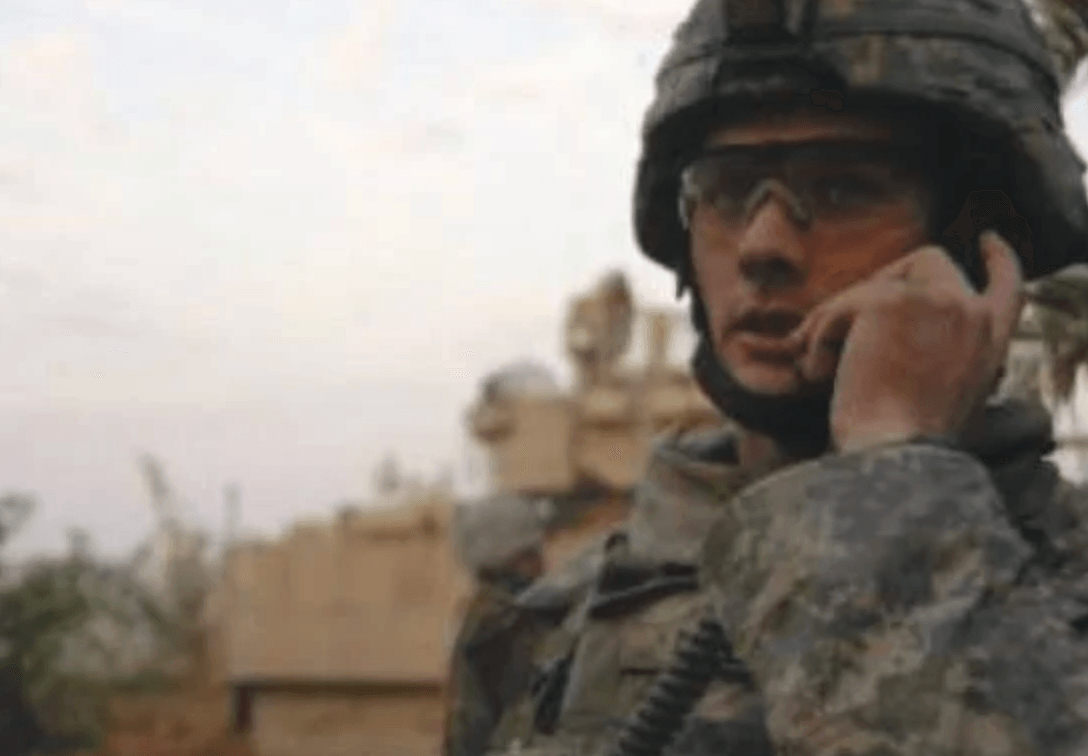
Pixler, a 2005 West Point graduate, arrived in Salman Pak, Iraq, in 2007 as a platoon leader with the 3rd Infantry Division. The region, rich with ancient history, was also a stronghold for insurgent violence. His mission was to build trust with local leaders like Sheik Ali while engaging in near-daily combat with al-Qaeda forces.
Then came October 30, 2007.
“I had a bad feeling,” Pixler recalled. “We were driving through moon dust. I told the driver to slow down.”
Seconds later, his Bradley Fighting Vehicle struck a massive buried IED — a 55-gallon drum packed with hundreds of pounds of explosives. The blast killed three soldiers instantly and critically wounded two others. Pixler, concussed and injured, pulled himself from the wreckage under enemy fire, called in air support, and helped coordinate the defense until reinforcements arrived.
Even after being medically evaluated, he refused to evacuate for long.
Determined to return to his men, he left the hospital on his own, hitchhiked on a helicopter, and, when dropped miles from his base, he used the stars to navigate across the Iraqi desert, Boy Scout-style, until he found his way back.
“What moves me about Ross’s story is the humility he carries. He speaks of being an ‘average cadet’ at West Point, of learning from failure, of the weight of leadership,” said Wallace. “That vulnerability is what connects these warriors to the rest of America.”
After recovering, Pixler completed his tour, later serving two deployments to Afghanistan before returning to West Point as a Tactical Officer. There, he now mentors the next generation of leaders — passing on not just tactics, but the wisdom of resilience.
“My job,” Pixler said, “is to educate, train, and inspire. To build a legacy.”
“That legacy is exactly what the Van of Valor seeks to preserve. We’re 27,000-miles into our journey since March, collecting stories from Purple Heart recipients and Gold Star families, it’s veterans like Ross Pixler who remind us why this mission matters,” said Wallace. ”His story—of a navigator, a rescuer, a leader—is a living map of valor, connecting the peaks of his youth to the battlefields of his service.”
And it is a story that will forever be part of the Purple Heart Trail.
To learn more, follow the Van of Valor journey at www.HelpVoV.com.
Make a one-time donation
Make a monthly donation
Make a yearly donation
Choose an amount
Or enter a custom amount
Your contribution is appreciated.
Your contribution is appreciated.
Your contribution is appreciated.
DonateDonate monthlyDonate yearly
Leave a Reply