By Dr. Kevin Wallace
Van of Valor
NORTH PORT, Fla. – In the heart of the country, Oklahoma has become a haven for the hearts of heroes.
When the Van of Valor limped into Oklahoma as one of the final states in its 280-day, 27,116-mile journey across the contiguous United States, its mission was to tell the story of an Oklahoma Veteran advocate and recipient of two Purple Hearts, Army Spec. Mitchell “Mitch” Reed.
Reed, an Armored Personnel Carrier (APC) driver with the 25th Infantry Division, single-handedly led the initiatives to have over 100 entities — mostly cities — across the state designated as Purple Heart sites.
In following the trail of Reed’s service, anthropologist and Van of Valor cofounder Lauren Wallace was led to two more names, each with a legacy of profound service in war and peace: Donald R. Nichols and John Henry Mashunkashey.
“Each of these stories is so profound that they don’t just live in history books or on plaques,” said Wallace, her voice thick with emotion. “They beat in the pulse of Oklahoma itself. We came here to document veterans, but we found the living, breathing soul of a state that remembers, that honors, that refuses to let sacrifice be forgotten.”
To understand her sentiment, one must first understand each of these heroes’ stories.
Spec. Mitchell “Mitch” Reed
Reed had his first brush with death in April 1967, when his unit came under heavy mortar and rocket fire. Despite being wounded, he returned to duty to fight alongside his brothers.
Exactly six months later, on October 27, 1967, he was wounded again, eventually spending over 70 days in an intensive care unit on a hospital ship before receiving an honorable discharge in 1969.
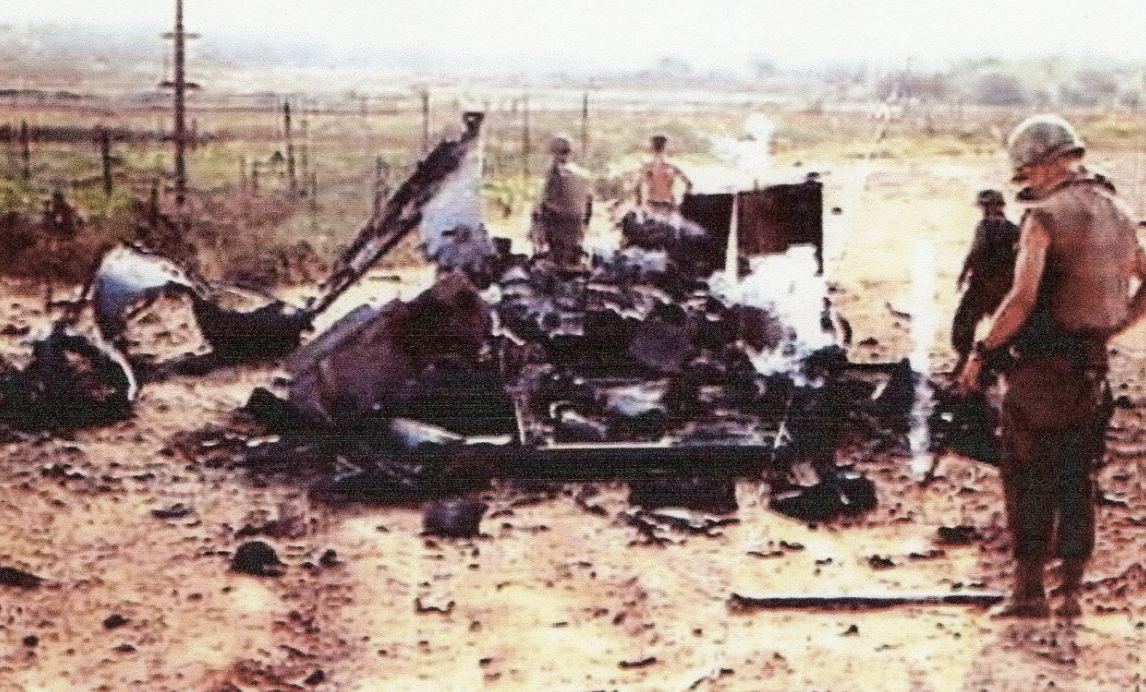
Reed’s most harrowing experience came during the Tet Offensive. While driving his APC toward an airstrip at midnight, an RPG struck his fuel tank, causing the vehicle to burst into flames.
After bailing out, he was shot in the chest, which collapsed his lung.
With a collapsed lung, gunshot wound, and injuries from the explosion, he was rendered helpless.
Unable to move and stranded in a “hot zone,” Reed spent the entire night playing dead as enemy soldiers passed within five yards of him, watching helplessly as two of his close friends were killed in hand-to-hand combat just feet away.
In the decades since, Reed has transformed his survival into a mission of advocacy.
As a leader within the Military Order of the Purple Heart (MOPH) Chapter 589, he has been the primary force behind designating more than 100 Purple Heart Cities in Oklahoma, ensuring that road signs at city limits serve as a permanent reminder of veteran sacrifice.
“Mitch’s work isn’t about signage,” Wallace observed. “It’s about creating a landscape of gratitude. Every ‘Purple Heart City’ sign is a whisper to every passing car: ‘Someone from here bled for you.’ He’s turned the entire state into a hallowed ground.”
His efforts reached a milestone when he helped establish Tulsa County as the first Purple Heart County in the state, a legacy that continues to grow through his role as a Legislative Ambassador for Oklahoma veterans.
Lance Cpl. Donald R. Nichols
Lance Cpl. Nichols served in Marine Corps infantry in Vietnam, primarily with C Company, 1st Battalion, 1st Marine Regiment. His service was defined by the brutal combat of Operation Hastings in 1966.
On September 14, 1966, Nichols was shot four times, including life-threatening wounds to his chest and hip, leaving him lying in a rice paddy, certain he was dying.
As he lay wounded, Nichols witnessed a fellow black Marine risk his life, running across the open rice paddies under intense fire to reach him and pull him to safety.
This act of selfless valor left an indelible mark on Nichols, who spent the next 60 years searching for the man to thank him personally, only having his service branch and skin color as identifiers.
Though his search was ultimately unsuccessful, the memory of that rescue became the catalyst for a major civil and veteran recognition project in Oklahoma.
In late 2024, Nichols organized a historic ceremony at the Muskogee MLK Community Center to designate 14 historically Black towns in Oklahoma as official Purple Heart towns.
By recognizing communities like Boley, Taft, and Rentiesville, Nichols sought to honor the legacy of the man who saved him and the broader contributions of black service members.
“Don Nichols carried a debt of life for six decades,” said Wallace. “When he couldn’t find one hero, he chose to honor a whole community of them. He didn’t just find peace; he built a monument of it, town by town, turning his personal search into a public tribute for generations.”
Nichols noted that the initiative finally brought him a sense of closure and “peace,” serving as a collective thank-you to the community that produced his rescuer.
Cpl. John Henry Mashunkashey

Cpl. Mashunkashey is a respected Osage elder, Marine Corps veteran, and a recent survivor of profound loss.
About a year ago, a devastating tornado struck Barnsdall, destroying the home where he had lived for decades — a home built by his late wife, Ahnawake, who had spent more than 70 years in the community.
Mashunkashey and his granddaughter, Lauren, survived the direct hit by sheltering in a safe room his wife had insisted on building. His military uniform, a testament to his service, was later found scattered by the winds, with pieces recovered as far away as Vinita, 70 miles to the east.
His dog, Lady, stayed close through the terror of the storm, but their cat, Cane, vanished, not returning home for seven long months.
When the Van of Valor reached out to David Hull, Marine Corps League of Oklahoma Reach Department commander, they learned Mashunkashey, Lauren, Lady, and Cane found refuge in the Pawhuska Senior Housing neighborhood, generously provided and furnished by the Osage Nation.
Specifically Wallace wanted to know if the Van of Valor could help fundraise for the cause.
“He’s a Nation elder, and like we Marines, the Osage Nation take care of their own,” said Hull. “I think they would appreciate the notion, but warm wishes and prayers are always needed.”
In a wave of community support, Butcher House sent a 40-lb. box of meat, and after losing all three of his vehicles, an Osage Marine from Hominy gifted him a pickup truck.
“Marines take care of each other,” Mashunkashey said. “And that means forever.”
This resilience is woven into the fabric of his life. Mashunkashey enlisted immediately after high school in 1965.
Serving as a Marine rifleman in the First I Corps, he was thrust into the crucible of the Battle of Khe Sanh in May 1968. During the intense fighting, he was shot twice and caught in a napalm explosion, suffering severe burns and critical brain trauma that nearly took his life.
The road to recovery was grueling; he spent a year and a half in a military hospital in Illinois, undergoing extensive physical therapy to regain the ability to walk.
Despite the physical and emotional scars of war, Mashunkashey returned to the Osage Nation with a renewed sense of duty to his people.
He became a central figure in tribal life, serving as an advisor for the Pawhuska District drumkeepers and as a member of the Osage Nation Minerals Council.
Mashunkashey has been a tireless advocate for Native American veterans, serving as the Commandant of the Department of Oklahoma Marine Corps League and Commander of the American Legion Post 198.
His leadership was instrumental in the design and planning of the award-winning Osage Nation War Memorial in Pawhuska.
Furthermore, his efforts led the Osage Nation to become the first tribal community in Oklahoma to receive the Purple Heart designation, paving the way for other nations like the Cherokee and Kiowa to follow.
Now, Mashunkashey continues his mission of remembrance and education.
“John Henry’s life is a testament to surviving storms — both on the battlefield and on the prairie,” said Wallace. “He has faced the vortex of war and the vortex of nature, losing nearly everything but his spirit. Each time, he rebuilds not just a home, but a legacy.”
The anthropologist continued, “He teaches us that sanctuary isn’t just a place you find; it’s a promise you keep, for your family, your community, and your brothers and sisters in arms.”
To reach the Van of Valor, email Manteo.Creative.SPOT@gmail.com, and visit www.HelpVoV.com.
Link to Osage Nation’s Facebook post about tornado
Make a one-time donation
Make a monthly donation
Make a yearly donation
Choose an amount
Or enter a custom amount
Your contribution is appreciated.
Your contribution is appreciated.
Your contribution is appreciated.
DonateDonate monthlyDonate yearly
Leave a Reply