By Van of Valor
MIDDLESBURG, FL – For Kevin and Lauren Wallace, the mission of the Van of Valor is to chase down history before it slips away.
Traveling the country in their renovated van, they seek out Purple Heart recipients and Gold Star families, ensuring that the stories of sacrifice and service are not lost to time. Sometimes, however, the stories find them.
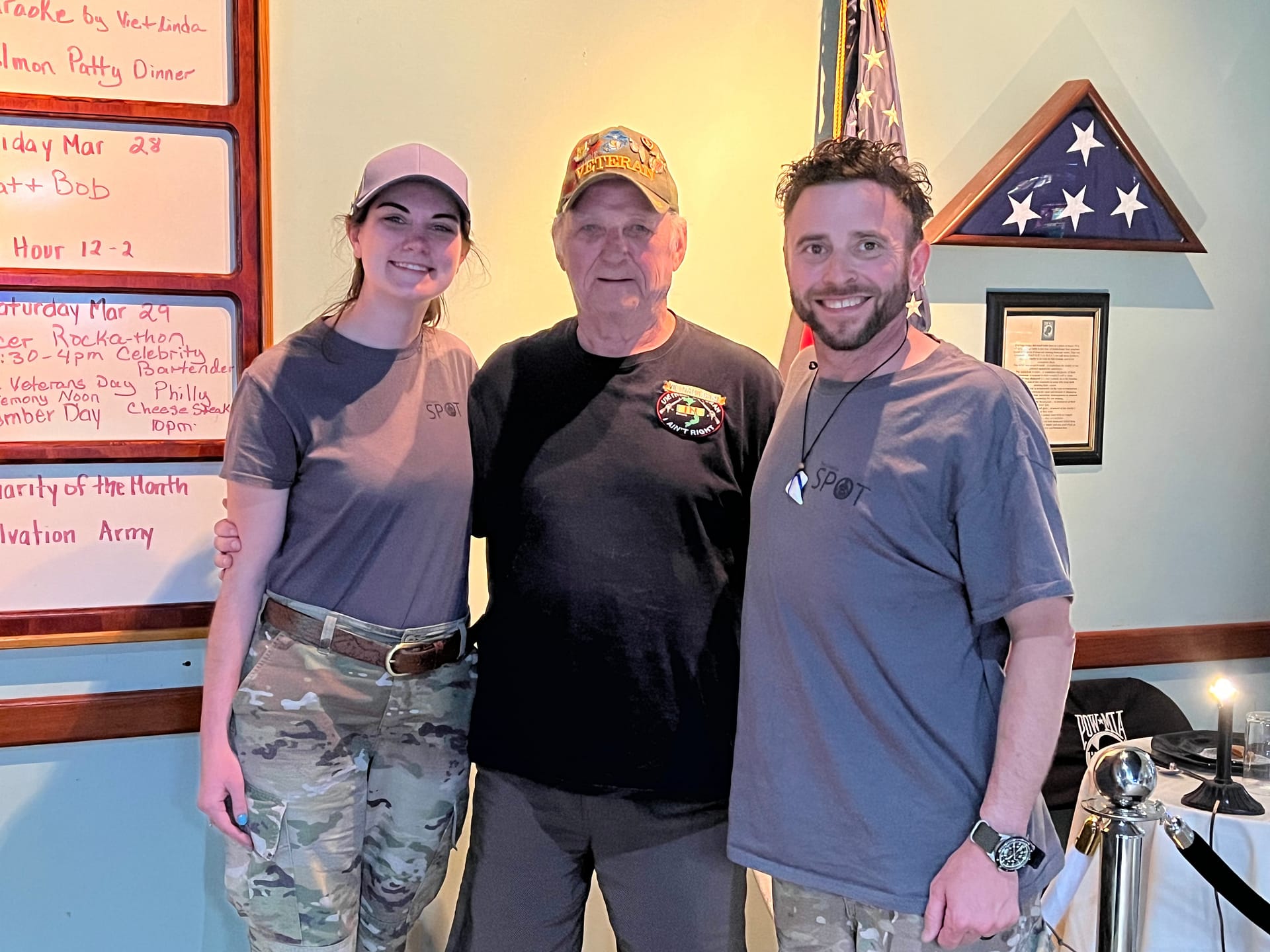
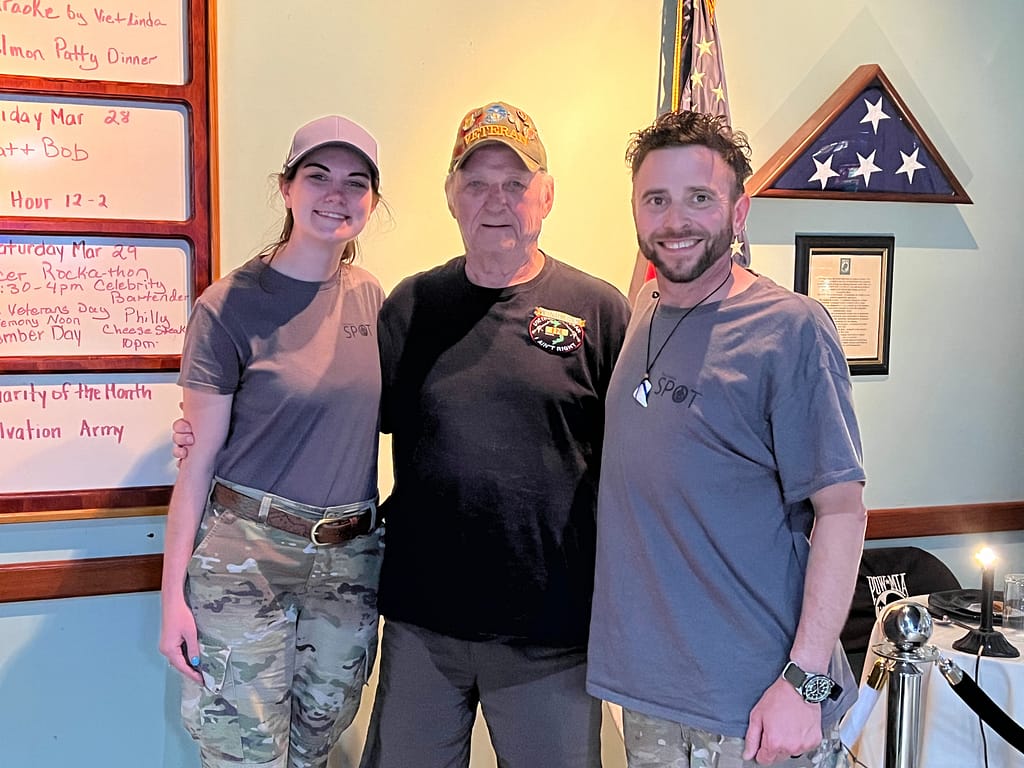
On a stop in Florida, what began as an introduction to one veteran turned into an impromptu and powerful interview with another: Sgt. Harry Silvers, a two-time Purple Heart recipient from the Vietnam War.
“We need to capture these stories before they’re gone, and we can never let American patriotism waver the way it has been in the past,” said Dr. Kevin P. Wallace, also a Purple Heart recipient and Van of Valor cofounder, in his introduction. “It’s due to a gentleman like this, who won’t call himself a hero, but I’m going to tell you he is.”
What followed was a raw, unfiltered account of a young Marine’s journey from a reluctant recruit to a combat-hardened squad leader, a testament to the “On the Job Training” that defined survival in the jungles of Vietnam.
From Draft Paper to Jungle Patrol
Silvers’ story began not with a sense of duty, but with defiance. He received his draft papers just after getting married.
“I refused to go into the Army,” Silvers recalled. “It’s like I ain’t going there until I do. I’m going to get killed.”
Instead, he walked into a Marine Corps recruiter’s office and signed up.
By October 1966, he was a Marine. After a whirlwind of training, he found himself on a tank crew. The shift from routine to war zone was abrupt.
On February 14, 1968, liberty call was secured at 4:35 PM. By 6:30 PM, he had orders for Vietnam.
“Didn’t know what the hell to think,” Silvers said. “All of a sudden, your whole world just turns upside down.”
He arrived in Vietnam to a jarring reality. Issued just 20 rounds of ammunition and warned not to shoot unless “absolutely necessary,” he was sent into the field with his fellow “L3-11s” with little practical preparation.
“We had no training. We had nothing,” he stated. “They put you in a field and then put you in. It’s up to you to survive or not.”
Leadership Forged in Fire
Despite being only a Lance Corporal, Silvers soon found himself as a squad leader responsible for 13 Marines. He recalls this responsibility with a note of pride amidst the chaos.
“I will say this. None of them ever got hurt. Not a single Marine was hurt under this man’s charge as a lance corporal,” Wallace echoed, emphasizing the point.
His leadership was born of necessity and a fierce protectiveness for his men. He recounted one harrowing night when a squad of North Vietnamese soldiers walked straight through their position, a failure he blamed on an incompetent sergeant.
“I refused to go back out with him because he’s an idiot. He’s going to get somebody killed,” Silvers said. His defiance led to the sergeant’s reassignment.
Silvers’ survival was guided by a seasoned mentor who was on his second tour.
“He taught me everything… If you don’t [pay attention], you’re not going to survive,” Silvers said. The man’s lessons were hard-earned; he was eventually shot 27 times before being killed.
The Purple Hearts: Luck and Fury
Silvers earned his first Purple Heart in early March 1968 in a moment of sheer luck. He was joking with a fellow Marine when a mine detonated nearby.
“It should have blown my shield off. But it didn’t,” he described. “It just wrapped around my legs, my thigh, and my side.” He was evacuated but returned to duty after just three days, brushing off the shrapnel wounds as “nothing really spectacular.”
His second Purple Heart came with a different emotion: pure rage. During a mission where his squad was pinned down, he found himself the specific target of an enemy combatant. In a surreal moment, he even threw his rifle at the attacker. As he ran for his life, he felt bullets passing beneath his feet with every step. He was hit by mortar shrapnel during the escape.
“He was hit with shrapnel from a mortar. And he wasn’t hurt. He was pissed,” Wallace summarized. Silvers’ own words captured the sentiment: “Some bitches tried to kill me. I was like, oh, hell no.”
A Bitter Homecoming and a Lasting Legacy
For Silvers and many of his generation, the return home was a “disaster.” He described a hostile reception at LAX and a struggling transition to civilian life amid the 1970s gas crisis and a tough job market.
“I got out in 1973. And I tried to get a job. Couldn’t get a job,” he said, expressing frustration with the Veterans Administration. “Wasn’t worth a shit. Still ain’t, in my opinion.”
He lamented leaving the service, calling it “the worst thing I ever did in my life.”
It is precisely these unvarnished narratives — the fear, the dark humor, the pride in his men, the anger at the enemy, and the pain of returning to a divided nation — that the Van of Valor seeks to preserve.
Harry Silvers may not call himself a hero, but his story, now captured and shared, is a powerful chronicle of the complex realities of war, the burden of command, and the resilience of the human spirit.
Through the Wallaces’ quest, the legacy of soldiers like Sgt. Silvers will continue to educate and inspire, ensuring that their sacrifices, and their truths, are never forgotten.
To read more stories or to support the Van of Valor mission, visit www.HelpVoV.com
Make a one-time donation
Make a monthly donation
Make a yearly donation
Choose an amount
Or enter a custom amount
Your contribution is appreciated.
Your contribution is appreciated.
Your contribution is appreciated.
Leave a Reply