By Dr. Kevin P. Wallace
On the morning of January 1, 2016, the Cologne police told the public that the city’s New Year celebrations had been largely peaceful.[2] They had not been. In the square between the central station and the cathedral, women had spent the night being surrounded, groped, robbed and, in some cases, raped by groups of men who emerged from a crowd of roughly a thousand.[1][3]
It took four days for the story to reach the world. When the BBC reported it on January 5, about 80 women had come forward, and Cologne’s police chief was calling it a new dimension of crime.[1] The number did not stay at 80. Cologne prosecutors eventually logged 1,210 criminal complaints from that night, 511 of them involving sexual assault and 28 alleging rape or attempted rape.[3] Germany’s Federal Criminal Police later put the nationwide count at about 1,200 women sexually assaulted, in Cologne, Hamburg, Düsseldorf, Stuttgart, Frankfurt and elsewhere, by more than 2,000 men.[2][5] Smaller clusters of reports came from Helsinki, Kalmar, Zürich and Salzburg.[2]
That is the crime. What followed is why I wrote a book.

The first failure: the night itself. Around 150 officers were on the ground to manage the crowd.[7] A state parliamentary inquiry later concluded, according to a draft reported by the Associated Press, that the attacks could have been “largely prevented” had police acted decisively when the first reports came in.[6] Germany’s own federal police listed the absence of visible police intervention as one of the factors that told offenders they would get away with it.[2]
The second failure: the truth. The police statement was wrong, and the police chief later admitted it; he was removed within the week.[2] The public broadcaster ZDF left the story out of its main evening bulletin on January 4 and apologized the next day for what it called a misjudgment.[2] In April 2016 the Daily Telegraph reported that the state interior ministry had asked Cologne police to take the word “rape” out of an early internal report.[2] Cologne’s mayor, asked how women could protect themselves, advised keeping strangers at arm’s length.[2] Germany’s press council later rewrote its guideline on reporting suspects’ origins.[3]
The third failure: justice. This is the one that should keep people awake. Cologne prosecutors investigated 290 people. Thirty-two were convicted, most of them for theft. Two men were convicted of sexual assault. Each received a one-year suspended sentence.[3] In Frankfurt, every sexual-violence case from that night was dropped for lack of evidence against identifiable individuals.[2] Of more than 2,000 men the federal police believe took part nationwide, about 120 were ever identified.[2][5]
Some good came of it. In July 2016 the Bundestag unanimously passed “no means no.” Before that vote, a German rape victim had to show she physically resisted. After it, groping was a sex crime.[4] But it is worth sitting with what that means: it took more than a thousand women being assaulted in one night for Germany to decide that “no” was enough.
I want to be exact about who did this, because exactness is what the victims were denied. The suspects police identified were overwhelmingly foreign nationals: of 153 Cologne suspects named by April 2016, 149 were non-German, 103 were from Morocco or Algeria, and 68 were asylum applicants.[2] Those are the authorities’ numbers. It is equally a matter of record that investigators found no evidence the assaults were centrally planned,[2] that most people who sought refuge in Germany had nothing to do with that night, and that within days, innocent Pakistani, Syrian and Guinean men were beaten in Cologne by mobs looking for someone to punish.[2] The women were failed first. Then strangers were made to pay for other men’s crimes. Neither is justice.
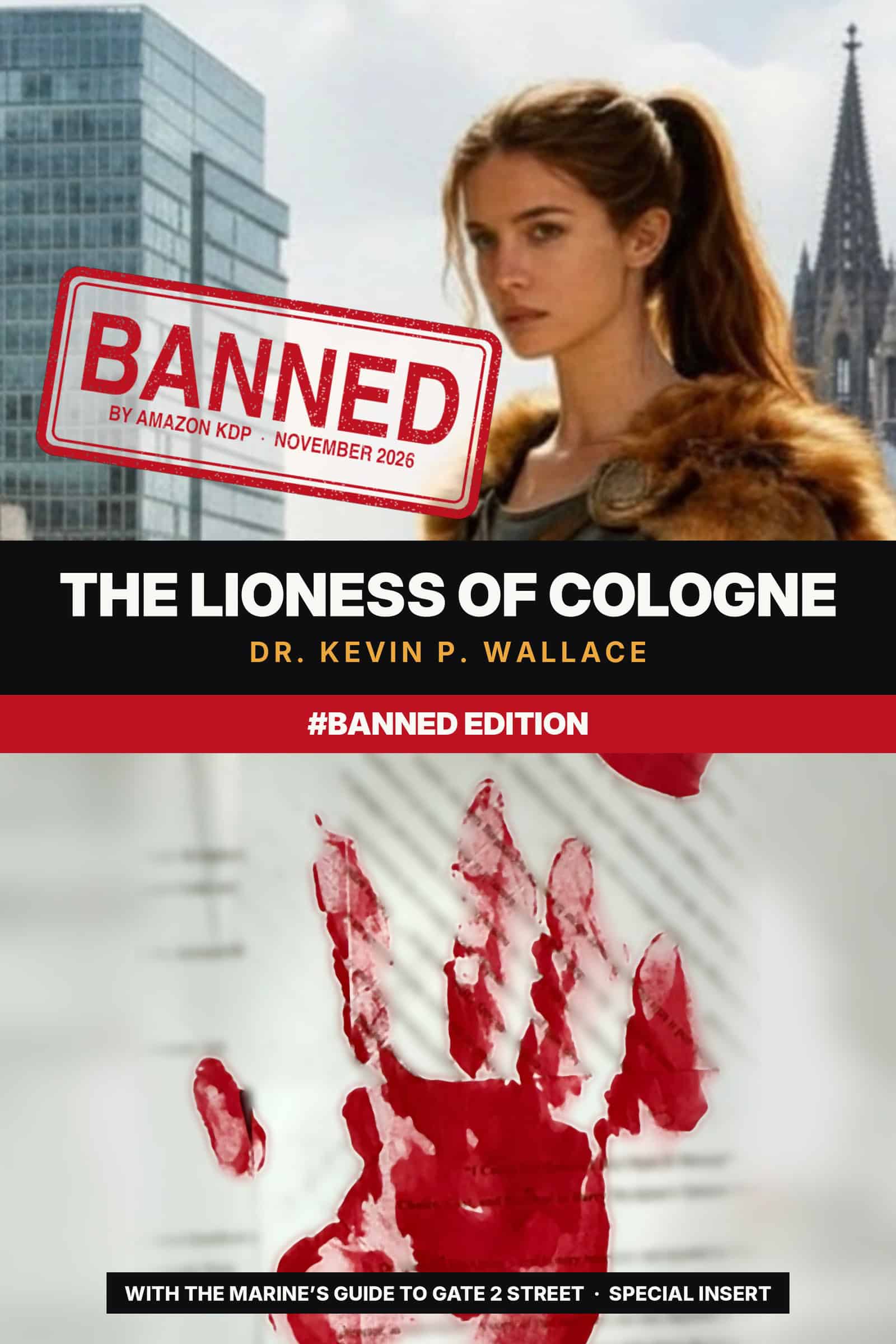
So I wrote a novel. Kara, the Lioness of Cologne, is fiction. The night she walks out of is not. I chose fiction because the courts closed the file with two suspended sentences, and a story can go where a case file stops: into what it costs a woman to be told that what happened to her was largely peaceful. Kara does what the institutions did not. She does not look away, and she does not let the reader look away either.
The book was pulled from sale once. It is available again, and I would rather you read it and argue with me than never get the chance.
Read it. Then read the sources below, every one of them, and decide for yourself whether Europe has kept faith with those women. Remembering accurately is the least we owe them, and it is the only way “never again” means anything.
The Lioness of Cologne is available now:
https://www.amazon.com/dp/B0H4WR8RT8
Sources:
- BBC News, “Germany shocked by Cologne New Year gang assaults on women,” 5 January 2016.
- Wikipedia, “2015–16 New Year’s Eve sexual assaults,” revision of 23 November 2026, https://en.wikipedia.org/wiki/2015–16_New_Year’s_Eve_sexual_assaults. Used as an index; the underlying sources are named in the table above. For publication, cite those originals directly.
- Ralf Bosen, “New Year’s Eve in Cologne: 5 years after the mass assaults,” Deutsche Welle, 31 December 2020, https://p.dw.com/p/3nH9L
- Kate Connolly, “Germany toughens rape laws after New Year’s Eve attacks in Cologne,” The Guardian, 7 July 2016.
- “Why did it take so long to learn full extent of German sex assault?”, Christian Science Monitor, 12 July 2016, https://csmonitor.com/World/2016/0712/Why-did-it-take-so-long-to-learn-full-extent-of-German-sex-assault
Make a one-time donation
Make a monthly donation
Make a yearly donation
Choose an amount
Or enter a custom amount
Your contribution is appreciated.
Your contribution is appreciated.
Your contribution is appreciated.
Leave a Reply